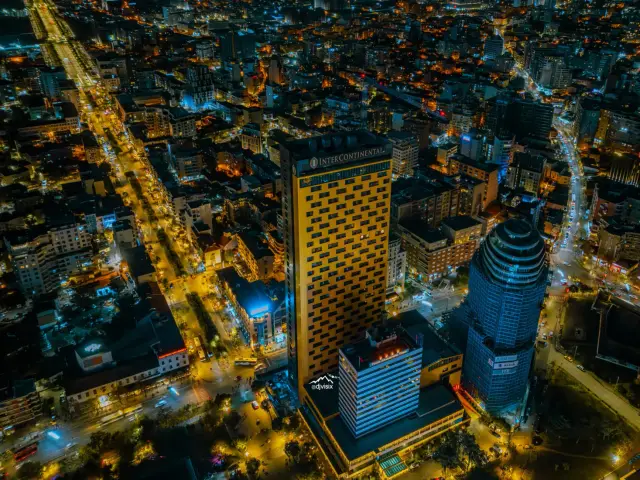
Albania’s capital is a lively, colourful city of museums, cafés and green spaces. Start at Skanderbeg Square, explore the Bunk’Art museums and the Blloku district, then take the cable car up Mount Dajti for a view over the whole city.
Culture & city energy — find your favourites and make the day yours.
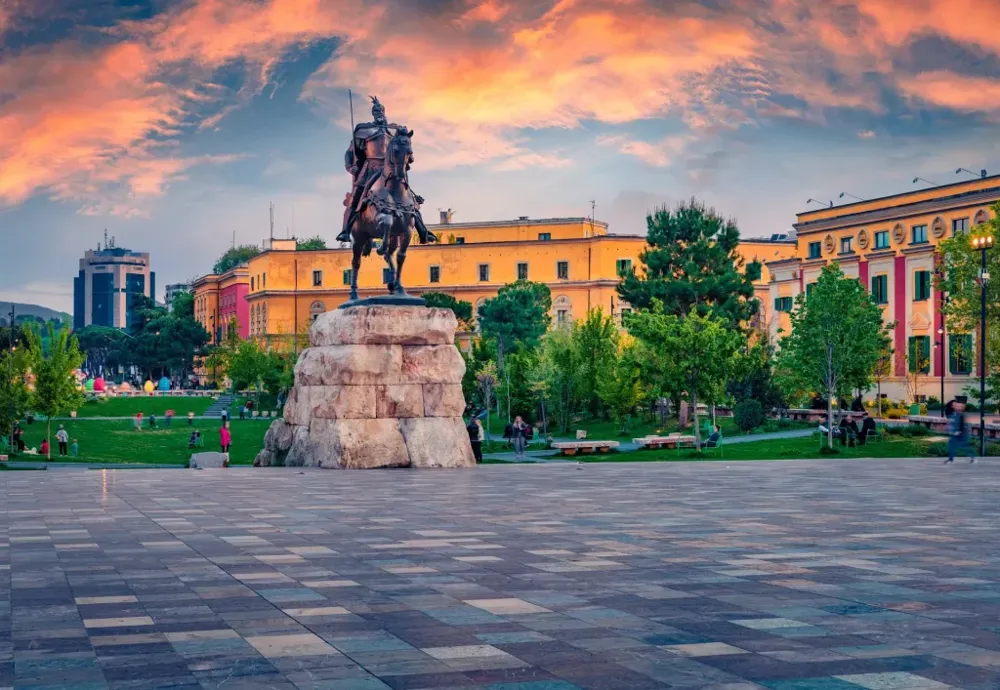
Skanderbeg Square (Sheshi Skënderbej) reopened in 2017 as a pedestrian space paved with stone from across Albania; the redesign won the 2018 European Prize for Urban Public Space. Odhise Paskali’s Skanderbeg statue (1968) shares it with the National Historical Museum, the Opera and the Et’hem Bey Mosque.
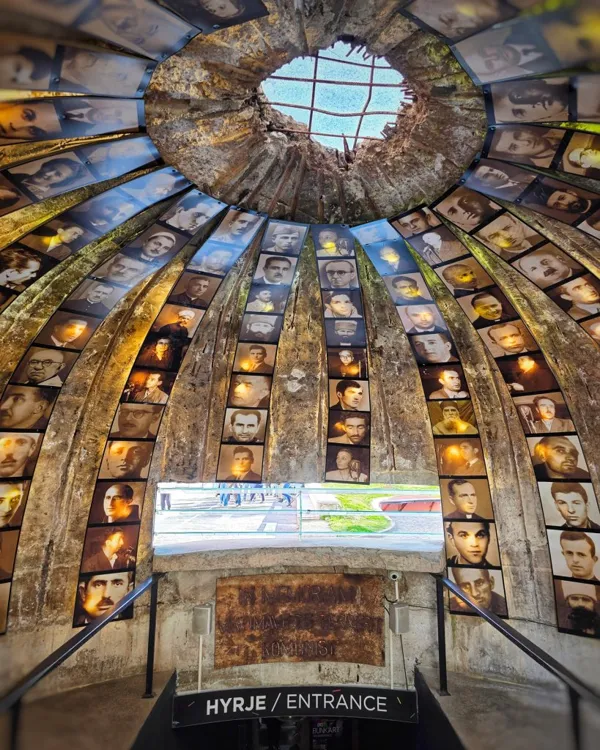
Bunk’Art 2 occupies an anti-nuclear shelter built in secret in 1981–86 beneath the Ministry of Internal Affairs in central Tirana. A museum since 2016, it covers the gendarmerie, the police and the Sigurimi secret police, and political persecution in 1945–1991. The entrance is on Rruga Abdi Toptani, opposite City Hall.
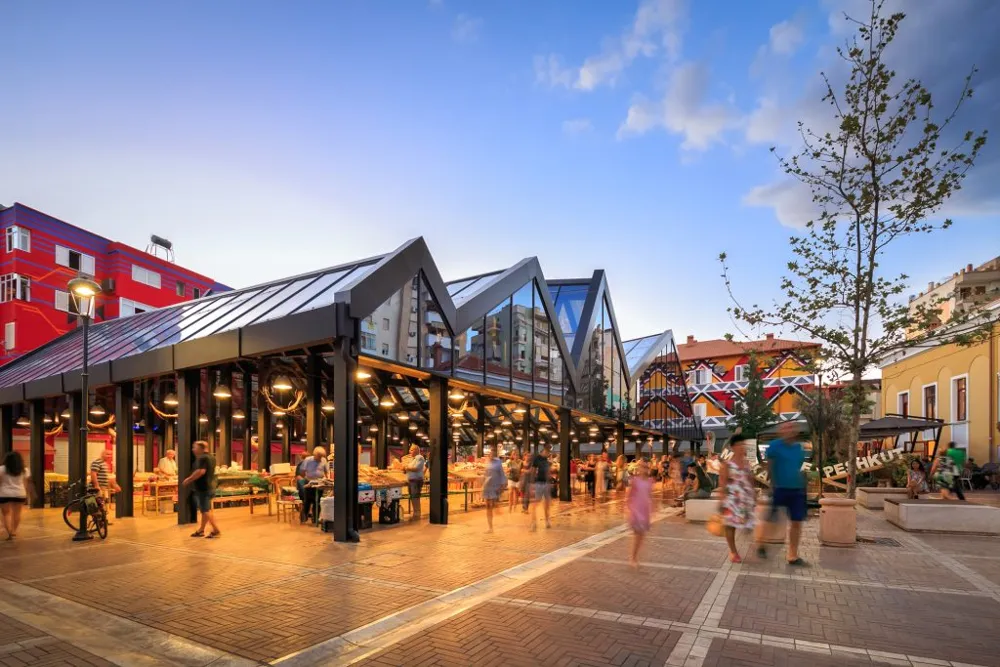
The New Bazaar (Pazari i Ri) has been trading around Avni Rustemi Square since 1931. Rebuilt in 2017, its covered hall sells fruit, vegetables, spices and Albanian specialities, next to a restored fish market and a corner for traditional crafts, with cafés and restaurants all around.
The Pyramid of Tirana opened in 1988 as a museum to Enver Hoxha, designed by a team that included his daughter Pranvera. Reworked by Dutch studio MVRDV, it reopened in 2023 as TUMO Tirana, a technology centre for teenagers, and steps on its sloping sides now let you climb to the top.
First protected in the 1960s, Dajti National Park now covers more than 28,000 hectares east of Tirana, where Mount Dajti rises to 1,613 m. Oak and beech woods shelter wolves, wild boar and brown bears, and the 4.7 km Dajti Ekspres cable car climbs from the city’s edge to the plateau.
Bunk’Art 1 fills a Cold War bunker built for Albania’s political and military leadership on Tirana’s eastern edge, behind the Dajti cable car station. Its five underground floors and 106 rooms, Enver Hoxha’s among them, trace Albanian history from 1939 to 1990. It stays cool inside, so bring a layer.
Kulla e Sahatit (the Clock Tower) was built in the early 19th century and is one of Tirana’s best-known symbols, a stone tower in Ottoman style. It stands beside Skanderbeg Square, next to Et’hem Bey Mosque, so it fits into any walk around the centre.
Set inside the Parku i Madh (Grand Park), Tirana’s Artificial Lake was created in the 1950s for flood control and covers 55 hectares. Its lakeside paths are busy with walkers, runners and cyclists, with cafés and sports areas along the way.
Ura e Brarit (Brar Bridge) is an 18th-century stone bridge with a semicircular arch over the Tirana river, below the village of Brar. It once linked the village with Tirana and the caravan road to Dibër, and today suits a walk or photos out of town.
Finds from prehistory to antiquity fill Tirana’s Archaeological Museum, Albania’s leading institution for archaeological heritage. Ornaments, mosaics, coins and other objects on display shed light on everyday life in ancient times.
Shëngjergj is a mountain village about 40 km east of Tirana, on the Erzen river and ringed by Mali me Gropa (literally ‘mountain of pits’). Rich in springs, lakes and caves, it draws walkers to its waterfall, castle ruins and Shpella e Valit (Vali Cave).
Albania’s foremost stage institution, the National Theatre of Opera, Ballet and Folk Ensemble was founded in 1953 and sits on Skanderbeg Square. It stages opera, ballet and symphony concerts from world and Albanian repertoire; check the programme.
Showing 12 / 44
Book directly with our travel partners.
Affiliate links: we may earn a commission if you book through these links. Prices, terms and availability are confirmed by the partner.
Emergency numbers in Albania and institutions for Tirana.
For immediate danger call 112. For a medical emergency call 127. Give your location and briefly explain what happened. These short numbers are for calls from Albania.
City information and public services.
Institutional police contacts for this area.
Hospital location and institutional information. For a medical emergency call 127.
For consular support, find your country’s representation through the Ministry for Europe and Foreign Affairs directory.
Sources checked on 8 October 2026. Institutional contacts are listed separately from emergency numbers.
Save what catches your eye. Bring your favourites into your trip plan and open directions when you’re ready to go.
Connect your business with visitors through Click Albania.